
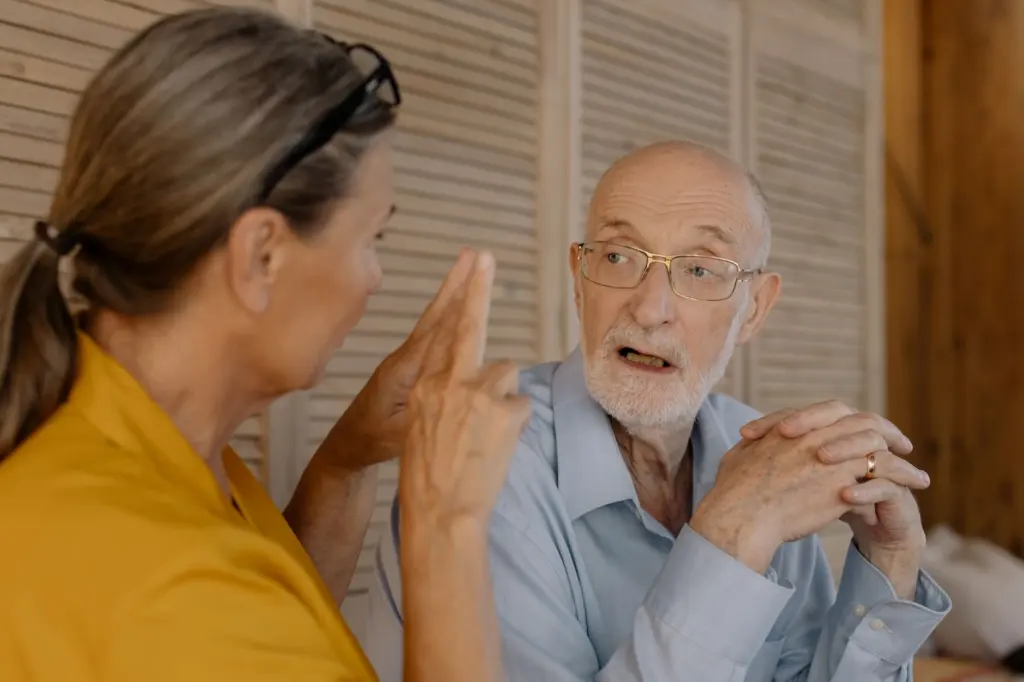
Meeting a friend’s grandmother, you reach for English “hello” and wonder how to say hello in Tagalog instead. Say “Kumusta po?” (koo-MOOS-tah po). It asks “How are you?”, and the po adds respect.
The rest of this guide corrects the usual assumptions about Tagalog greetings. It is also a small case study in how to learn slang in a new language, because register (who you are speaking to) shapes every greeting below.
Hello in Tagalog is a question, not a single word
Learners often hunt for a one-word equivalent of “hello”. FilipinoPod101 notes that Tagalog and Filipino have no direct equivalent of the English word, so people greet each other with the question “How are you?”. The most common form is kumusta, which Preply glosses literally as “How are you?”. Once you accept that the greeting is a question, most of the supposed rules become easier to follow.
| Common assumption | What works in practice | Planning use |
|---|---|---|
| Tagalog must have a word for “hello”. | There is no direct equivalent; speakers greet with “How are you?” (kumusta). | Learn kumusta first and build every other greeting around it. |
| Kamusta and kumusta are different words. | Kamusta is a spelling variant of kumusta. | Use either spelling when writing; pronounce them the same way. |
| Musta is fine for anyone. | Musta is a shortened casual form kept for your inner circle. | Use it only with close friends; default to kumusta with everyone else. |
| English “hi” or “hello” is wrong. | English is a second language in the Philippines, and Filipinos often greet with “hi” or “hello”. | An English hello will be understood, but a Tagalog greeting shows effort. |
| Adding po is optional politeness. | Po instantly shows respect, and forgetting it with elders makes a poor impression. | Add po whenever you speak to an elder or someone you do not know well. |
Figures and glosses in the table come from FilipinoPod101 and Preply.
The practical lesson is that you do not need many phrases. A single question, adjusted for who you are talking to, covers most first meetings.
Kumusta and the forms you will actually hear
Kumusta changes shape depending on the person you are addressing and how well you know them. These are the forms worth learning first:
- Kumusta ka? This is the informal “How are you?” for a single person, as italki lists it. It suits peers and friends.
- Kumusta po? Adding po makes the same question formal and respectful. Choose it when you are unsure of the other person’s age or standing.
- Kumusta po kayo? This is the formal, polite form that italki gives. It is the safest choice for older relatives, officials and anyone you want to treat with deference.
- Kumusta kayo? FilipinoPod101 explains that kayo replaces ka when you refer to more than a single person, so this form greets a group.
- Musta? The short casual form is for close friends only, according to Preply.
When you are unsure, choose the more formal form. Dropping po later because the other person invites you to is easy. Recovering from a missing po is harder.
Pronouncing kumusta
Kumusta is pronounced koo-MOOS-tah, with the stress on the second syllable, as Preply spells out. English speakers tend to hurry toward the end of the word. Instead, say it slowly, lean on the MOOS in the middle, and let the final syllable fall away lightly.
Po is short, and the same source advises a softer “p” than you might use in English. Because po is tacked onto the end of a phrase, a gentle release keeps it sounding like a courtesy and not an afterthought. Say the whole phrase, “koo-MOOS-tah po”, at an even pace before speeding up.
Greetings by time of day
Kumusta is not the only way in. Tagalog also has greetings tied to the part of the day, and Preply gives typical windows for each:
- Magandang umaga (good morning) fits from sunrise until about 11:00 AM.
- Magandang hapon (good afternoon) runs from noon until sunset, typically between 12:00 PM and 5:00 PM.
- Magandang gabi (good evening or night) works from about 6:00 PM onward through the night.
Treat these hours as approximate guides, since the source describes them as “about” and “typically”. If your timing falls between windows, a kumusta question is a safe substitute and avoids the doubt entirely.
Each of these also has a formal and an informal version. italki shows “Magandang umaga po” as the formal or polite form and “Magandang umaga” as the informal one. The same pattern holds for the other greetings: the po marks the difference, so you only need to learn the phrase once.
Po and opo: greeting politely
Politeness in Tagalog is carried by small particles, not by a separate vocabulary. Po signals respect. Opo does the same job in a reply: Preply advises using opo instead of the casual oo when you answer yes to an elder’s question. italki also lists oho as a formal alternative, with oo as the informal yes.
Consistency matters more than any single phrase. According to Preply, forgetting po or opo when speaking with elders is a quick way to make a bad impression in Filipino culture. A respectful opening greeting followed by bare, unmarked replies undercuts the effect, so keep po through the whole conversation. Think of it as an ongoing signal of how you regard the person, not a ritual at the start.
Matching the setting
Formality also depends on the place. Preply notes that government offices and traditional ceremonies usually call for more pure Tagalog. A relaxed mixture of English and Tagalog suits friends, but in an official setting a plain, full-form greeting with po is the better choice.
Using English hi or hello
English greetings are not a faux pas. Because English is a second language in the Philippines, FilipinoPod101 reports that hearing Filipinos greet each other with “hi” or “hello” is not unusual. italki adds that this is especially common among close friends. If you are a visitor, an English hello is understood, and following it with a polite kumusta po shows you are making an effort without sounding stilted.
Which greeting to choose
A short decision path covers most encounters:
- Check the age and relationship. An elder, official or stranger calls for po; a close friend allows musta.
- Pick the question. Use kumusta ka? for a single peer, kumusta po kayo? for a polite approach, and kumusta kayo? for a group.
- Consider the hour. If the time of day is clear, a Magandang umaga, hapon or gabi greeting, with po where needed, fits just as well.
- Keep the courtesy going. Answer with opo and keep po in later sentences when you are speaking with someone senior.
Adopt the same register that others use with you. If someone drops po and answers casually, you can follow their lead; if they keep it, so should you.
Where to go next
Greetings are a gentle first step into any language. If you are weighing which language to study, Is Korean Hard To Learn For English Speakers? A Practical Guide To What To Expect In 2026 – Slanguagestudio looks at what English speakers face with Korean, and What Is The Easiest Language To Learn In The World? A Practical Guide For English Speakers (2026) – Slanguagestudio offers a wider comparison.
Frequently asked questions
| Question | Answer |
|---|---|
| What does Kumusta ka na? mean? | FilipinoPod101 translates it as “How have you been?”, implying that you have not seen the person for some time. Use it for reunions, not first meetings. |
| Where does kumusta come from? | Preply traces it to the Spanish greeting “¿Cómo está?”, which also means “How are you?”. |
| What does mabuhay mean? | FilipinoPod101 says its root word is buhay, meaning “life” or “alive”. The expression became popular when the 1994 Miss Universe pageant was held in the Philippines. |