
A visitor invited to a barbie this arvo might wonder what to bring or wear. Australian slang words like these are casual shortenings: a barbie is a barbecue, and arvo is the afternoon. Context decides the rest.
This guide groups Australian terms by the mistakes visitors most often make with them: false friends, shortened words, non-literal phrases and rude-sounding labels. It belongs to our wider coverage of slang words and meanings.
Words that do not mean what you expect
The most common misunderstanding is assuming a familiar word carries its familiar meaning. Babbel’s list of Australian expressions notes that in Australia pissed means drunk, while pissed off means angry. That differs from American usage, where the shorter word is often heard as annoyed. A visitor who announces they are pissed after a bad flight can cause a very different reaction from the one intended. If you mean annoyed, use the longer phrase or plain English.
Other terms are simply opaque until someone explains them. Barbie is not a toy or a nickname. Chuck a sickie is not about being ill. Bogan is a label rather than a neutral description. The table below sets out four terms where a wrong guess is easy, with the point to remember for each.
| Term | Meaning | Watch for | Planning use |
|---|---|---|---|
| Pissed | Drunk | Pissed off means angry, and the sense differs from American usage | Choose “annoyed” or “angry” when you mean that, and expect “drunk” when you hear the short form |
| Barbie | A barbecue, either the object or a meal at someone’s house | The word can name the event as well as the equipment | Treat an invitation to a barbie as an invitation to a casual meal |
| Chuck a sickie | Take a sick day while in perfect health | It describes a worker who is not actually ill | Understand it when you hear it; it is a poor phrase to apply to yourself at work |
| Bogan | A label for a person, described as not a very polite saying | It is not a polite term | Recognise it, but do not use it to describe anyone |
Definitions for pissed and bogan follow Babbel’s guide to Australian expressions, and those for barbie and chuck a sickie follow Studies in Australia’s guide to Aussie slang.
Shortened words and the -o habit
Many visitors assume Australian slang is a secret vocabulary. A large share of it is ordinary English cut short. The Australian National Dictionary Centre at the Australian National University points to the habit of adding -o to an abbreviated word, and arvo is a standard example of that pattern. Once you spot the pattern, unfamiliar words become easier to decode: say the likely long form in your head and test it against the situation.
- Arvo: the shortened form of afternoon, built with the -o suffix. It fits plans and timings, as in “see you this arvo”.
- Acca: an Australian abbreviation for academic. The Australian National Dictionary Centre records its first appearance in Meanjin (Melbourne, 1977), so it is a recorded part of Australian English rather than a tourist invention.
- Barbie: short for barbecue, as noted above. It uses a different ending from the -o words, so the pattern is a guide, not a rule.
The practical lesson is that shortened words are the safest slang for a visitor to pick up. They are low-risk and friendly, and they rarely carry an insult. For the pattern itself, see the Australian National Dictionary Centre’s meanings and origins entries.
Phrases that are not literal
A second misunderstanding is trying to translate a phrase word for word. Several Australian expressions only make sense through their history, and the dictionary record explains them better than guesswork does.
- She’s apples: everything is fine, all is well. The Australian National Dictionary Centre says it was originally rhyming slang, though the rhyme is no longer evident. A visitor does not need the rhyme to use it correctly; the meaning is what matters.
- Ant’s pants: an Australian variant of the originally US forms bee’s knees. The dictionary record dates it to the 1930s. It shows that Australian slang often adapts existing English phrases rather than inventing everything from scratch.
- Chuck a sickie: a sick day taken in perfect health, as set out earlier. It describes behaviour, so it is more a phrase to recognise than one to adopt.
- Anzac and diggers: Anzac is formed from the initial letters of Australian and New Zealand Army Corps, and Australian soldiers are also called diggers. The Anzac biscuit’s association with the Army Corps goes back to 1917, according to the same dictionary record. These words carry military history, so the safest approach is to use them only when you are sure of the setting.
Phrases like she’s apples behave as idioms: their meaning cannot be built from the individual words. If that is the part of English you want to practise, our guide Speak Like A Native: 25 Must-Know Idioms With Meanings And Everyday Examples (2026 Guide) – Slanguagestudio covers the wider category.
Barbecues, pubs and bottle-os
Social vocabulary is where visitors are most likely to hear slang quickly, and where a wrong guess has the most visible effect. A barbie can be the barbecue as an object or a meal at someone’s house. The same word can therefore describe a piece of equipment in a shop or a social invitation, and the surrounding sentence tells you which. If someone says they are having a barbie on the weekend, they are describing an event.
Bottle-o is what Australians often call a liquor store. It follows the same -o habit as arvo and acca, so it is easy to remember once you know the pattern. Use it as a landmark word when asking for directions or hearing a plan: “I’ll stop at the bottle-o” simply means a visit to the liquor store.
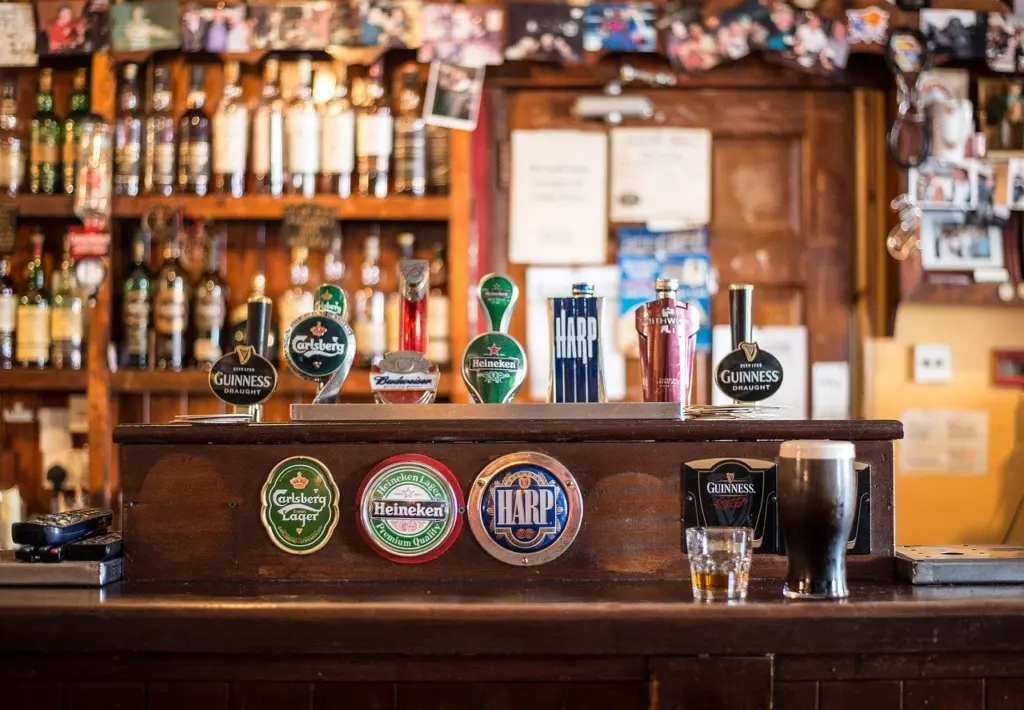
Drinking talk is also where the false friend pissed turns up most often, so keep the difference between drunk and angry in mind whenever a night out is being described.
Impolite terms and etiquette
Not every Australian word is a friendly shortcut. Pom is a derogatory word for a British person, according to Babbel. Bogan is, in the same guide’s words, not a very polite Australian saying. A visitor can safely recognise both words, but neither is a good choice to apply to someone you have just met. Using a label like these about a person is riskier than using a shortened word like arvo.
Slang varies by age, region and social group, as the Souvenirs Australia slang guide points out. That makes one habit more reliable than any glossary: listen to how the people around you speak, and copy only what suits the setting. Repeating a word you heard once in a different group can sound forced or, with the wrong word, rude.
- Start with shortenings. Words like arvo and barbie are descriptive and low-risk, so they are the best words to try first.
- Recognise, do not repeat. Terms such as pom and bogan are worth understanding when you hear them, but they are labels about people and are better left to others.
- Check the meaning behind familiar words. Pissed is the clearest example of an English word that shifts meaning, so when a word sounds ordinary but the sentence does not make sense, ask.
- Let context lead. The same principle applies to abbreviations everywhere; our guide to ASL Meaning (Slang): What It Means, How to Use It, and Why Context Matters – Slanguagestudio shows how much a single short form depends on the setting.
The overall judgement is simple: a visitor sounds friendlier using a few words correctly than many words half-right. Ask when unsure, since locals are usually happy to explain a term.
Frequently asked questions
| Question | Answer |
|---|---|
| Which Australian slang words are dated? | Cobber is somewhat dated and rarely used by younger Australians. More broadly, some classic expressions are now used jokingly or nostalgically rather than in everyday conversation, so treat older-sounding phrases as playful rather than standard. |
| Is Australian slang the same everywhere? | No. Slang can vary by age, region and social group, so a word that is natural in one circle may sound odd or old-fashioned in another. |
| What does ambo mean, and is it a new word? | Ambo means an ambulance officer. It follows the common Australian -o abbreviation pattern, and the Australian National Dictionary Centre says it was first recorded in the 1980s. |
| Does Australian slang always come from Australia? | Not always. Locals adapted the American phrase bee’s knees into their own version, ant’s pants. |